


Veterinary Advisor: Dogs Cats
4.45.00 Reviews
App Specs
- Version
- 3.13.1
- Updated On
- License
- Free
- Downloads
- 10,000+
- Developer
- Skyscape Medpresso Inc
- Categories
- Medical
- Platform
- Android
Screenshots
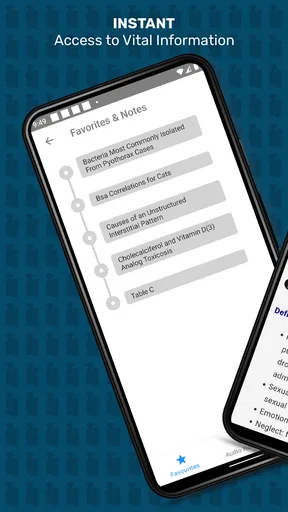
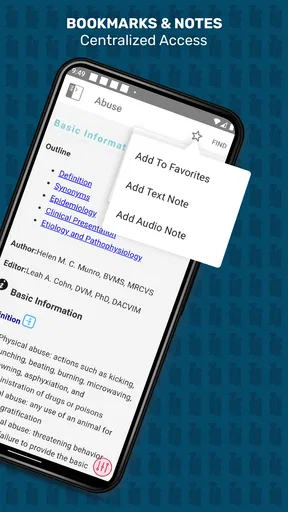
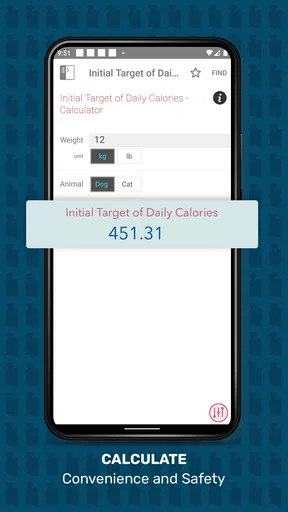
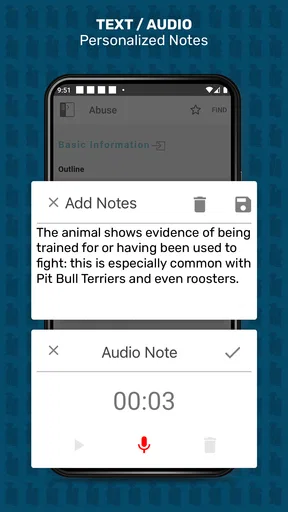
 Analysis by AppCompare
I look at Veterinary Advisor: Dogs Cats as a practical reference tool for people who already work with small animals, rather than as a general pet-care app for casual owners. Its focus is medical information for dogs and cats, and that narrow purpose is its biggest strength. When I want a quick way to organize my thinking around a common clinical problem, a focused veterinary reference can be more useful than searching the open web and sorting through forums, advertisements, and conflicting advice.
The app is developed by Skyscape Medpresso Inc and is available free to install for everyone. That makes it easy to try, although the free download should not be confused with completely free access to every part of the reference. Optional in-app purchases range from $69.99 to $89.99 per item, so the real decision is whether the paid material fits the way you work. I would not recommend buying anything immediately. I would first test the navigation, search experience, and the amount of useful content available without payment.
How Veterinary Advisor: Dogs Cats fits into a real veterinary workflow
When I picture Veterinary Advisor: Dogs Cats in everyday use, I see it as a reference one person consults while the rest of a household or clinic team keeps its own records and decisions organized elsewhere. I’d use it to prepare a focused question before a conversation, then share the relevant explanation rather than treating the phone as a shared patient file. That distinction makes coordination more useful—and leads naturally to the question of who should have access to the device and its account.
A reference for the busy moments between appointments
The app makes the most sense in a clinic where time is limited and the user needs a compact source to consult between examinations. A small animal practitioner may be moving from a dog with vomiting to a cat with skin irritation, then trying to prepare a clear explanation for an owner. In that setting, a dedicated dogs-and-cats reference is more relevant than a broad medical app filled with human medicine or unrelated animal species.
I would use it as a second layer of support: first gather the history, perform the examination, and identify the clinical question; then use the reference to structure the next step. That distinction matters. A digital book can help me remember possibilities, compare approaches, and prepare better questions, but it does not replace clinical judgment, examination findings, laboratory work, or local protocols.
A realistic use case is a busy afternoon consultation involving a dog whose symptoms do not point neatly to one condition. Instead of relying on a quick general search, I can open a veterinary-specific source and look for a more organized discussion of the problem. The benefit is not simply speed. It is the ability to stay within a dog-and-cat context, where species differences and practical treatment considerations are less likely to be overlooked.
Who will benefit most
The strongest audience is the veterinary professional or student who wants a portable companion for small animal medicine. It may also suit veterinary nurses and other clinical staff who need background information for patient discussions, provided they use it within their role and do not treat it as authorization to diagnose or prescribe independently.
Worth Reading Before You Choose

Flipboard Shows What News Apps Must Do Beyond the Feed

Switching to Android Auto Means Rethinking Your Driving Routine

Google Calendar Makes a Crowded Week Easier to Manage

Ludo King Makes the Most of the Minutes Between Plans

Baby Panda World Brings Quick Play to Modern Phones, but Its Game Library Feels Busy

ESPN’s Live Game View Makes Following Close Games Easier
Students may appreciate having one place to revisit familiar topics after class or before practical work. The app can be especially useful when studying by clinical scenario rather than by isolated facts. For example, instead of memorizing a long list of conditions, a learner can start with a presenting complaint and use the reference to connect signs, possible causes, and questions that deserve attention.
Pet owners are a different case. The age rating is Everyone, but that does not make the content ideal for unsupervised home diagnosis. A worried owner could easily read a description, recognize one symptom, and assume the most serious or most convenient explanation. I would only suggest it to an owner who is comfortable reading medical material and who plans to discuss what they find with a veterinarian.
The current product in practical terms
The app has an average rating of 4.4 from around 57 ratings, and it has passed 10K+ installs. Those figures suggest that it has found a real audience, but they are not a substitute for checking whether its workflow suits you. A medical reference can be highly valuable to one clinician and awkward to another depending on search habits, preferred terminology, and tolerance for paid content.
Its current version is 3.13.1, which is useful context when judging the product today. I see that version as evidence of an app that has continued through multiple revisions rather than remaining a one-off digital publication. At the same time, a version number alone does not tell me that every part of the experience has been modernized. The important question is whether the current build makes consultation faster and clearer in daily use.
The app was released on Sep 24, 2019, so existing users have had time to build it into their routines. For someone installing it now, that history has two sides. A mature reference may offer a more settled reading experience, while a newer specialist tool might feel more polished in areas such as discovery, note-taking, or integration with other work. I would judge Veterinary Advisor: Dogs Cats primarily as a reference library, not as a complete digital clinic system.
How I would test it before spending money
My first session would be deliberately practical. I would search for a familiar dog-related topic, then a cat-related topic, and compare how quickly I can move from a broad complaint to useful detail. I would also try a spelling variation and a term that a student might use instead of the formal medical phrase. This reveals more than browsing a few attractive entries because real consultations rarely begin with perfectly chosen terminology.
Next, I would check whether I can return to useful sections without repeating the same search. A reference becomes much more valuable when it supports a repeatable workflow: find a topic, read enough to frame the problem, move to a related section, and return later without losing orientation. If the paid boundary appears at the exact point where the app becomes useful, I would treat that as an important cost consideration rather than assuming the free installation is sufficient.
One practical tip is to use the app before a busy shift, not for emergency improvisation. Spend a few minutes learning how topics are arranged and how the search behaves while there is no patient waiting. That small investment can prevent fumbling through menus when attention is divided. It also helps you decide whether the app complements your existing references or merely duplicates them.
What the version history means for existing users
For people who already use the app, the move to version 3.13.1 is best understood as a current checkpoint rather than a promise about future changes. The release history tells me that the product has evolved, but it does not automatically prove that every update changes the medical content in a clinically meaningful way. Users should separate improvements to the app shell from updates to the underlying reference material.
That distinction is important in medical software. A smoother interface can reduce friction, but it does not by itself make a recommendation more current. Existing users should continue to compare important decisions with the latest professional guidance, institutional rules, and the patient’s individual findings. I would also avoid assuming that an updated app replaces a trusted primary reference simply because the app itself has received a newer version.
For a returning user, the main benefit of staying current is continuity. Once a reference has become familiar, even modest navigation improvements can save time because the user already knows where to look. The trade-off is that an update may change the feel of menus or search behavior, so I would spend a short period rechecking the routes I use most often after installing a new version.
Where it is stronger than ordinary alternatives
The obvious alternative is a general web search. That approach is convenient, but it often produces a mixture of professional sources, outdated pages, commercial material, and owner discussions. Veterinary Advisor: Dogs Cats has a clearer species focus, which reduces the amount of irrelevant sorting. When I need a small animal reference rather than a broad internet answer, that focus is a meaningful advantage.
Another alternative is a printed veterinary textbook. Books remain excellent for deep study and sustained reading, and I would still prefer them when I need a broad conceptual explanation or want to compare several chapters carefully. The app is better suited to short consultations, travel between rooms, and moments when carrying a full reference is inconvenient. It does not need to defeat a textbook; it needs to make the quick-reference job easier.
There is also the option of a large professional database. A more expansive platform may provide wider coverage, more frequent editorial updates, or stronger tools for citations and evidence review. That can be the better choice for a hospital, a specialist service, or a clinician who needs detailed literature support. Veterinary Advisor: Dogs Cats is more appealing when the priority is a focused dog-and-cat reference that can sit alongside, rather than replace, those larger resources.
Important limitations before relying on it
The biggest limitation is the difference between installation price and practical ownership cost. The app is free to download, but the optional purchases are substantial enough to deserve careful consideration. If you only need occasional background reading, the paid items may not make sense. If you consult the material regularly and it saves repeated searching, the value calculation changes. I would make that decision based on frequency of use, not on the appeal of having a specialist title on the phone.
Another limitation is the risk of false confidence. A concise reference can make a complicated case appear more straightforward than it is. Dogs and cats can present with overlapping signs, and a single symptom rarely establishes a diagnosis. I would never use an entry as a shortcut around triage, patient examination, medication checks, or follow-up planning.
The app may also be less suitable for users who want a fully connected workflow. If your ideal tool includes patient records, appointment management, team collaboration, automatic calculations, or direct communication with owners, this is not the kind of product I would choose as the central system. Its value is in reference access, and adding unrelated functions would not necessarily improve that purpose.
Three ways to get more from it
First, search from the clinical question you actually have, then broaden only when necessary. Starting with a symptom or presentation can be more useful than hunting for a disease name you have not yet established. This reduces anchoring and encourages a wider initial view.
Second, use it to prepare conversations, not only decisions. Before speaking with an owner, I would review the relevant topic and identify which explanations need plain language, which warning signs require emphasis, and which questions remain unanswered. That turns the app into a communication aid without pretending that it can replace the consultation.
Third, pair it with a personal verification habit. When the case involves a high-risk patient, an unusual presentation, or a treatment with important consequences, use the app as one reference point and then confirm the decision through the current sources and procedures your workplace requires. This is a small workflow change, but it prevents the convenience of a mobile reference from becoming overreliance.
Who should skip it
I would skip it if you are looking for a free, all-purpose pet health guide. The medical focus may be too technical, and the paid content may not offer enough value for occasional household questions. A reputable veterinarian remains the right choice for a sick pet, especially when symptoms are sudden, severe, or unclear.
I would also hesitate if you need a reference that is explicitly built around research discovery, formal citations, or a broader range of species. In those situations, a larger professional database or a specialist textbook may be a better investment. The focused dog-and-cat scope is useful, but it is also a boundary.
What I would watch as the app continues
Future development should be judged by whether it improves clinical consultation rather than simply increasing the version number. I would look for clearer ways to move between related topics, dependable search behavior, and transparent handling of paid sections. For a reference app, small reductions in friction can matter more than decorative changes.
I would also pay attention to how the product communicates the currency and scope of its medical content. Users need to know how to position a digital reference within their wider professional resources. Clearer context around updates would help existing users distinguish interface changes from substantive revisions to the reference itself.
Finally, I would watch whether the app remains focused. Its strongest identity is as a dog-and-cat medical companion for the busy small animal practitioner. Adding features that support that purpose could make it more useful; adding unrelated tools could make it harder to navigate. For me, disciplined focus is more valuable here than trying to become an entire veterinary practice platform.
My recommendation
I recommend Veterinary Advisor: Dogs Cats to veterinary students and small animal professionals who want a focused mobile reference and are willing to evaluate the paid material carefully. The free installation makes testing straightforward, while the current version and established release history suggest a product that has continued to develop since its original release.
I would not describe it as a replacement for a veterinarian, a full clinical database, or a complete practice-management system. I would describe it as a useful pocket reference whose value depends on how often you work with dogs and cats, how quickly you need to consult medical material, and whether the available content justifies the in-app purchase. If that matches your routine, it is worth trying. If you only want simple pet advice or a fully free resource, I would look elsewhere.
My bottom line: use it as a focused clinical companion, not as the final authority. That expectation gives the app its proper place. In the right hands, Veterinary Advisor: Dogs Cats can reduce search friction and support better preparation; in the wrong hands, its convenience could encourage conclusions that deserve a proper examination and professional review.
Pros
- Covers common dog and cat health concerns in clear
- accessible language.
- Useful symptom references can help owners prepare for a vet visit.
- Includes practical care information for everyday pet ownership.
- Supports quick browsing when you need basic veterinary guidance.
- Helpful for new pet owners learning about routine animal care.
Cons
- It cannot replace a professional diagnosis or emergency veterinary treatment.
- Some information may be too general for pets with complex medical conditions.
- Content quality depends on how regularly veterinary guidance is updated.
- Users may misinterpret symptoms without sufficient medical context.
- The app may offer limited value for owners seeking advice about other animals.
FAQs for Veterinary Advisor: Dogs Cats
What is Veterinary Advisor: Dogs Cats used for?
Veterinary Advisor: Dogs Cats is designed as an informational reference for people who live with dogs and cats. It can help users explore general information about common symptoms, diseases, conditions, treatments, and veterinary terminology. The app is useful for preparing questions before a clinic visit, but it should not be treated as a substitute for a professional examination, diagnosis, or personalized medical advice from a licensed veterinarian.
Can Veterinary Advisor: Dogs Cats diagnose my pet’s illness?
No. The app cannot reliably diagnose a dog or cat because a proper diagnosis often requires a physical examination, medical history, laboratory tests, imaging, and professional judgment. Its content may help you understand possible causes or recognize terms used by veterinarians, but similar symptoms can come from very different conditions. If your pet is unwell, use the app only as background information and contact a veterinarian for an accurate assessment.
Is Veterinary Advisor: Dogs Cats suitable for emergencies?
It should not be relied on as an emergency service. Signs such as difficulty breathing, collapse, severe bleeding, poisoning, seizures, repeated vomiting, bloating, inability to urinate, or sudden weakness require immediate veterinary attention. Searching through an app may delay treatment during a critical situation. Keep the contact details of your regular veterinarian and a nearby emergency clinic available, and call them directly whenever your pet’s condition appears serious or rapidly worsens.
Does the app provide treatment instructions or medication dosages?
The app may include general explanations of treatments, medicines, or veterinary conditions, depending on the topic you are viewing. However, users should never select a drug, change a prescription, or calculate a dosage for a pet without veterinary guidance. Dogs and cats can react differently to medicines, and some human medications are dangerous or fatal to them. Always follow the instructions provided by your veterinarian and verify any information before taking action.
Is Veterinary Advisor: Dogs Cats useful for both dogs and cats, and does it require internet access?
The app is intended to cover information relevant to both dogs and cats, making it convenient for households with either or both types of pets. The availability of individual topics and features can depend on the app version and device. Some reference material may be accessible after installation without an internet connection, while downloads, updates, advertisements, or external links may require connectivity. Check the store description and permissions before installing.


